• Home
  • About
  • K-8 Education
    • Kindergarten >
      • Change Agents
      • Little Pail Patrol vs Pacific Garbage Patch
      • Simple Machines
      • Intro to Coding
      • Marble Runs
      • Intro to Engineering
      • Invent!
      • Ocean Currents
      • Movie Making
    • First Grade >
      • Wildlife Corridors
      • Stop Motion
      • Marble Runs
      • Coding
      • Rube Goldberg Machines
    • Second Grade >
      • Spider Monkey Escape
      • Bees
      • Circuits
      • Homemade Coding
      • Coding Robots
    • Third Grade >
      • Identity: Who Am I?
      • Planetary Lander
      • Wildlife Corridors
      • Coding Bees
      • Stop Motion
      • Genie In A Bottle
    • Fourth Grade >
      • Claymation: Juan Ponce de Leon
    • Fifth Grade
    • Sixth Grade >
      • History >
        • The Fertile Crescent
        • What's Up Egypt?
        • Good Morning Egypt
        • Stop Motion: How a Bill Becomes a Law
    • Seventh Grade
    • Eighth Grade >
      • Cuneiform
      • Student Creation in Photos: Global Collaboration
      • Finance >
        • Banks
  • Middle School PBL
    • Spring 2026: EPIC Social Enterprise
    • Fall 2025: Silent Voices: Lost and Endangered Languages
    • Spring 2025: The Talking Walls
    • Fall 2024: A Hobbit Democracy
    • Spring 2024: Neighbors
    • Fall 2023: Witness Trees
    • Spring 2023: Environmental Justice Stories
    • Fall 2022: Sustainable Space
    • Spring 2022: Allies
    • Fall 2021: Renaissance
    • Fall 2021: Alexander von Humboldt
    • Spring 2021: Exploration
    • Fall 2020: Activism
    • Spring 2020: The Road Less Traveled
    • Fall 2019: Neighbors
    • Spring 2019: Take A Stand
    • Fall 2018: Citizens
    • Spring 2018: Bridging History
    • Fall 2017: Voices
    • Spring 2017: Choose Your Own
    • Fall 2016: Democracy is a Verb
  • PBL Toolkit
    • Scrum Blog
    • Scrum In Action
    • The Tubric
    • Ethic of Excellence
    • State of Our PBL Meetings
    • My Process
  • Global Classroom
    • Global Classroom 2025-2026
    • Global Classroom 2024-2025
    • Global Classroom 2023-2024
    • Global Classroom 2022-2023
    • Global Classroom 2021-2022
    • Global Classroom 2020-2021
    • Global Classroom 2019-2020
    • Global Classroom 2018-2019
  • Cardboard
    • Cardboard Library
    • Château du Clos Lucé
    • Hobbit Doors
    • Space Helmets
    • Black History Celebration
    • Iron Man Mask
  • LEGO in Action
    • LEGO Robotics
    • Marble Maze Challenge
    • Brooklyn Bridge
    • Mesopotamia
  • 3D Printing
  • Cricut with AutoPress
  • Glowforge
    • Black History Listening Project
  • LIVE Weather Cam
  • Chess Takeover
  • Drone Arena
  • SLICE
    • SLICE Overview
    • SLICE in photos
  • Epic Field Trips
    • Presidential Inauguration: Barack Obama
    • Chicago
    • New York City

Invent!

Mission: Use Little Bits to create!

Learning about the process of inventing is beneficial for young learners for a variety of reasons:
  1. Promotes Creative Thinking: Inventors are problem solvers who think outside the box. By learning about inventing, children are encouraged to use their creativity to think of novel solutions to problems.
  2. Encourages Resilience and Perseverance: The process of inventing involves trial and error. By learning about the challenges inventors face and how they overcome them, students can develop resilience and perseverance.
  3. Inspires Innovation: Learning about inventing can inspire students to be innovative. This is particularly important in the 21st century, where the ability to innovate is highly valued in many industries.
  4. Enhances Problem-Solving Skills: Inventing involves identifying a problem, brainstorming potential solutions, designing and building a prototype, and then testing and refining the solution. This process helps students develop their problem-solving skills.
  5. Supports STEM Learning: Inventing can often involve concepts from science, technology, engineering, and math (STEM). Therefore, learning about inventing can support students' STEM learning and potentially spark their interest in these subjects.
  6. Builds Confidence: When students invent something – whether it's a new gadget, a solution to a community problem, or a work of art or story – they build confidence in their ability to create and contribute.
  7. Teaches about Patents and Intellectual Property: Understanding the basics of patents and intellectual property can be beneficial for young learners. It can teach them the value of their ideas, and how such ideas can be protected and monetized in the real world.
  8. Promotes Entrepreneurial Thinking: Inventing is at the heart of entrepreneurship. By learning about inventing, students can develop an entrepreneurial mindset which involves creativity, problem-solving, resilience, and a focus on innovation and continuous improvement.
  9. Real-World Connections: The stories of inventors and their inventions can often make academic subjects more engaging and relevant for students. They can see the real-world impact of creativity, hard work, and knowledge.
Picture
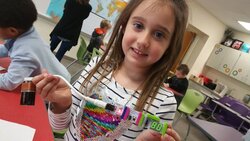
She used some Little Bits and made a thermometer which told us it was a little warm in our room!

Proudly powered by Weebly
  • Home
  • About
  • K-8 Education
    • Kindergarten >
      • Change Agents
      • Little Pail Patrol vs Pacific Garbage Patch
      • Simple Machines
      • Intro to Coding
      • Marble Runs
      • Intro to Engineering
      • Invent!
      • Ocean Currents
      • Movie Making
    • First Grade >
      • Wildlife Corridors
      • Stop Motion
      • Marble Runs
      • Coding
      • Rube Goldberg Machines
    • Second Grade >
      • Spider Monkey Escape
      • Bees
      • Circuits
      • Homemade Coding
      • Coding Robots
    • Third Grade >
      • Identity: Who Am I?
      • Planetary Lander
      • Wildlife Corridors
      • Coding Bees
      • Stop Motion
      • Genie In A Bottle
    • Fourth Grade >
      • Claymation: Juan Ponce de Leon
    • Fifth Grade
    • Sixth Grade >
      • History >
        • The Fertile Crescent
        • What's Up Egypt?
        • Good Morning Egypt
        • Stop Motion: How a Bill Becomes a Law
    • Seventh Grade
    • Eighth Grade >
      • Cuneiform
      • Student Creation in Photos: Global Collaboration
      • Finance >
        • Banks
  • Middle School PBL
    • Spring 2026: EPIC Social Enterprise
    • Fall 2025: Silent Voices: Lost and Endangered Languages
    • Spring 2025: The Talking Walls
    • Fall 2024: A Hobbit Democracy
    • Spring 2024: Neighbors
    • Fall 2023: Witness Trees
    • Spring 2023: Environmental Justice Stories
    • Fall 2022: Sustainable Space
    • Spring 2022: Allies
    • Fall 2021: Renaissance
    • Fall 2021: Alexander von Humboldt
    • Spring 2021: Exploration
    • Fall 2020: Activism
    • Spring 2020: The Road Less Traveled
    • Fall 2019: Neighbors
    • Spring 2019: Take A Stand
    • Fall 2018: Citizens
    • Spring 2018: Bridging History
    • Fall 2017: Voices
    • Spring 2017: Choose Your Own
    • Fall 2016: Democracy is a Verb
  • PBL Toolkit
    • Scrum Blog
    • Scrum In Action
    • The Tubric
    • Ethic of Excellence
    • State of Our PBL Meetings
    • My Process
  • Global Classroom
    • Global Classroom 2025-2026
    • Global Classroom 2024-2025
    • Global Classroom 2023-2024
    • Global Classroom 2022-2023
    • Global Classroom 2021-2022
    • Global Classroom 2020-2021
    • Global Classroom 2019-2020
    • Global Classroom 2018-2019
  • Cardboard
    • Cardboard Library
    • Château du Clos Lucé
    • Hobbit Doors
    • Space Helmets
    • Black History Celebration
    • Iron Man Mask
  • LEGO in Action
    • LEGO Robotics
    • Marble Maze Challenge
    • Brooklyn Bridge
    • Mesopotamia
  • 3D Printing
  • Cricut with AutoPress
  • Glowforge
    • Black History Listening Project
  • LIVE Weather Cam
  • Chess Takeover
  • Drone Arena
  • SLICE
    • SLICE Overview
    • SLICE in photos
  • Epic Field Trips
    • Presidential Inauguration: Barack Obama
    • Chicago
    • New York City